Remember when promoting your music meant sending hundreds of cold DMs to creators, hoping someone would bite? Or paying a marketing agency thousands of dollars to manually compile spreadsheets of "potential influencer matches" that might (probably won't) respond?
Yeah, that era's officially over.
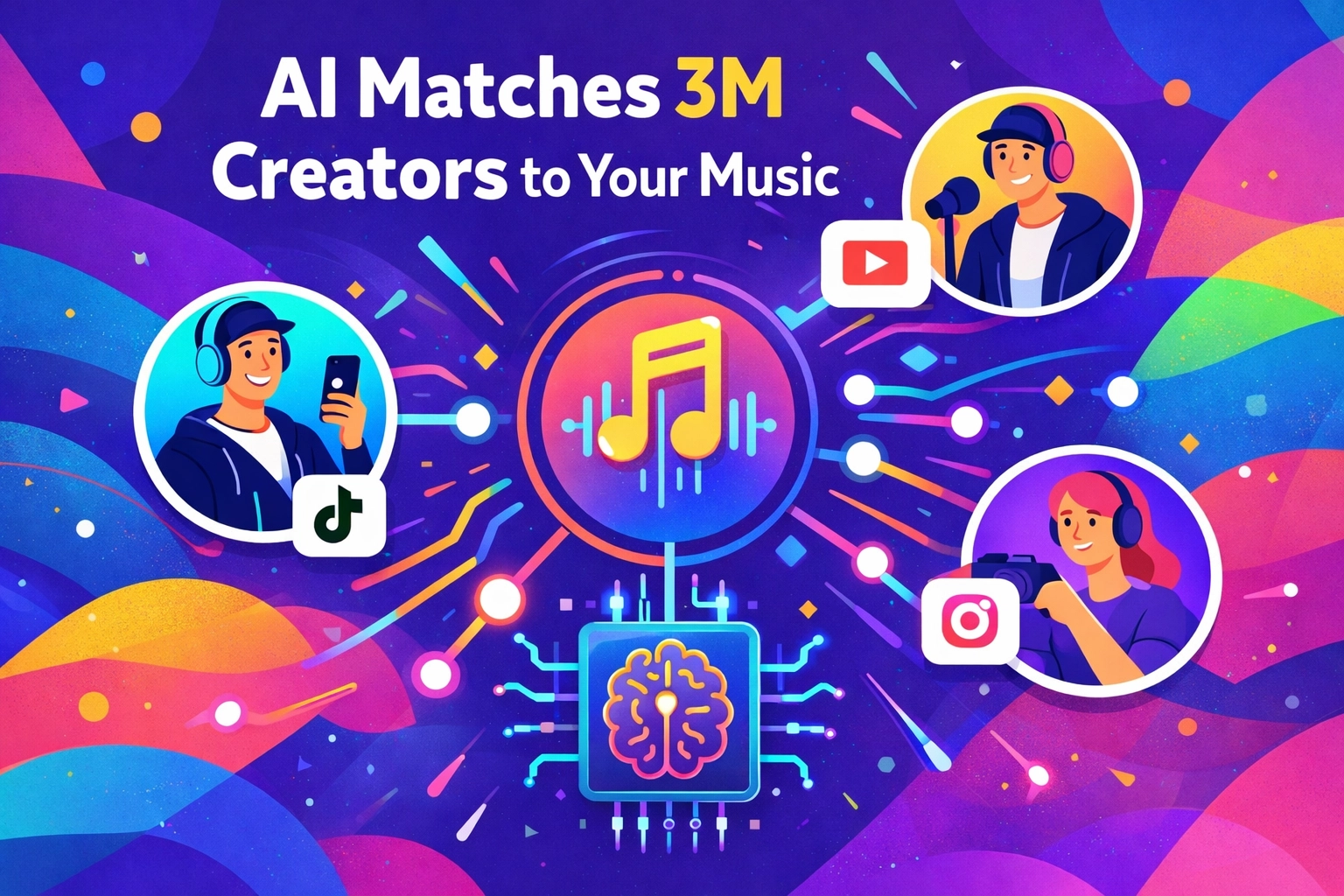
The music marketing platform landscape just got a massive upgrade, and it's powered by something most artists don't fully understand yet: artificial intelligence that actually works. Not the gimmicky kind. We're talking about AI that can scan millions of creator profiles, analyze their content preferences, audience demographics, and engagement patterns: then match your track with creators who'll genuinely vibe with it. In literal minutes.
Here's how that's changing everything for artists trying to break through the noise.
The Old Way Was Broken (And Everyone Knew It)
Let's be real about traditional TikTok music promotion and influencer outreach. You'd spend weeks researching creators who might fit your genre. Then you'd craft personalized messages (or pretend to). Send them out. Wait. Follow up. Wait some more. Maybe 2% would respond. Of those, half weren't actually interested: they just wanted to see if you'd pay them directly.
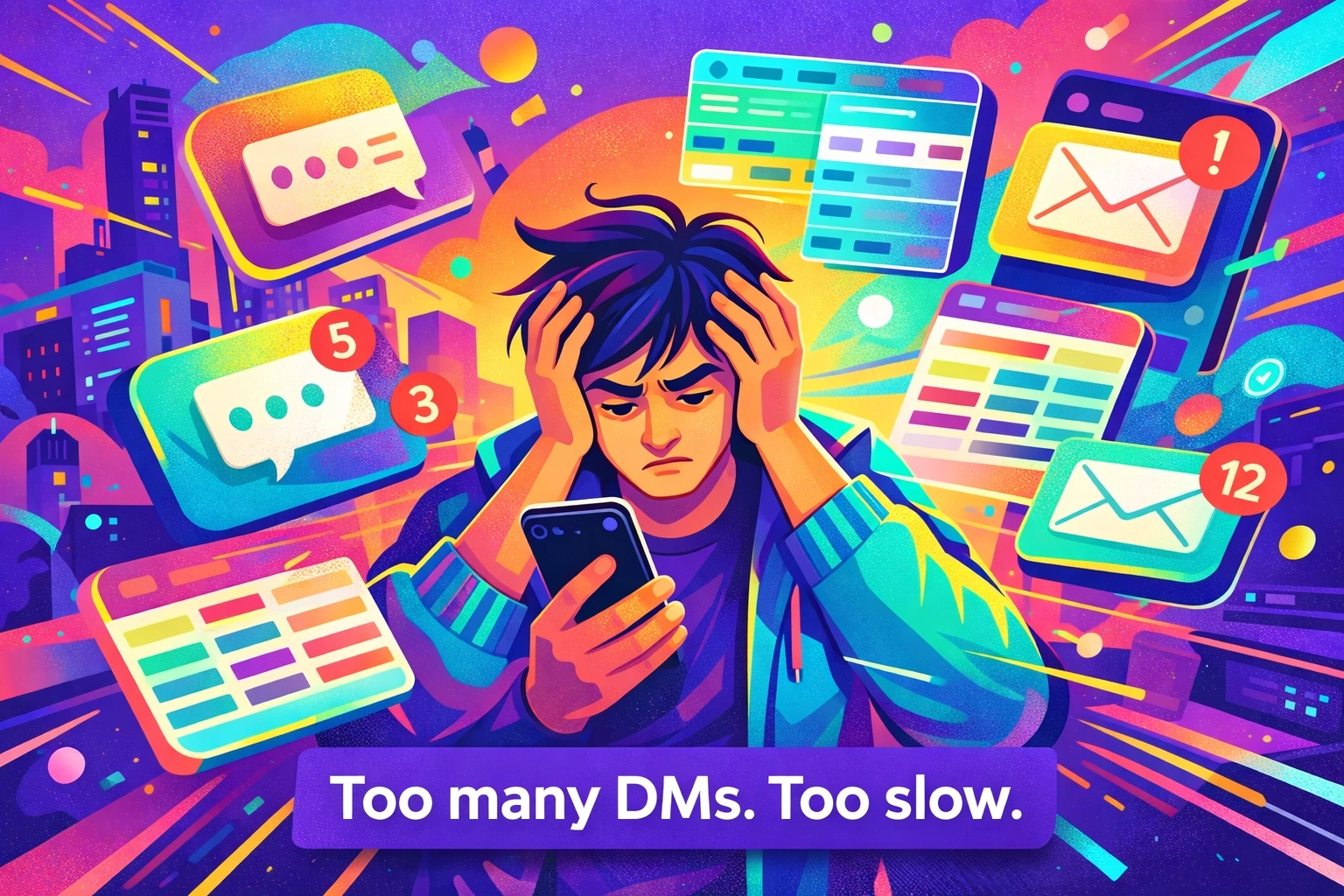
Even if you had a budget and hired someone to do this for you, the process was fundamentally flawed. Human beings can't analyze thousands of creator profiles quickly enough to find genuine matches. They rely on surface-level metrics like follower counts (which mean almost nothing) or recent viral videos (which don't predict future performance).
The result? Mismatched campaigns, wasted budgets, and songs that never found their audience: even when that audience was actively scrolling through their feeds.
How AI Actually Finds Your Perfect Creator Match
Here's where it gets interesting. Modern influencer marketing platforms don't just look at how many followers someone has. They're analyzing dozens of data points simultaneously:
Content Analysis:
Audience Intelligence:
Performance Prediction:
When you upload a track to a platform like Sound.me, AI instantly processes all this information across millions of creator profiles. It's not making random matches: it's identifying creators who have the highest probability of genuinely connecting with your music and whose audience will stream it.
The 3 Million Creator Advantage
Scale changes everything in music marketing. When you have access to 3 million creators across different platforms, niches, and audience sizes, you're no longer hoping to find the right match. You're statistically guaranteed to find hundreds of them.
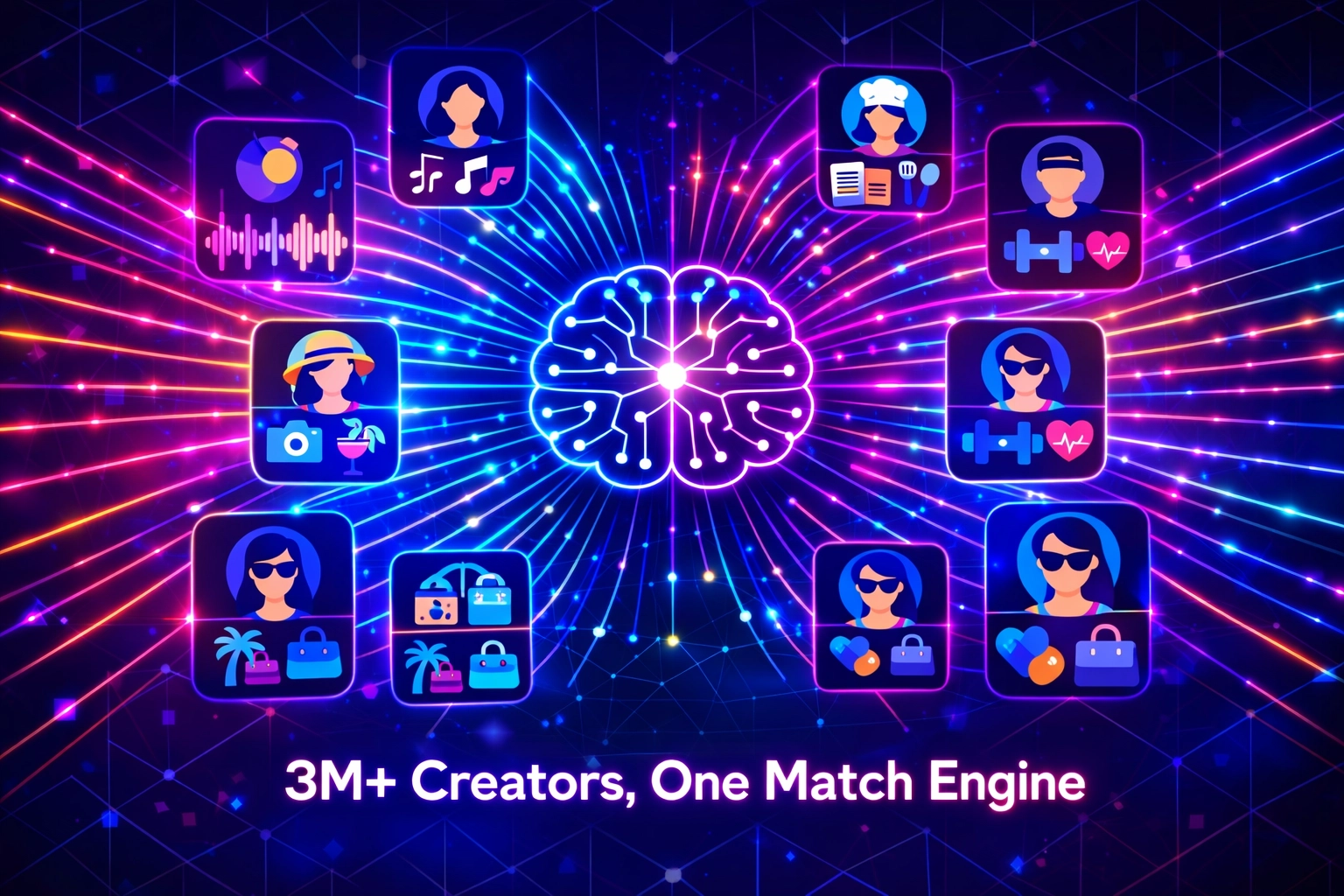
But here's what most artists miss: it's not just about quantity. It's about diversity of reach.
Your song might absolutely crush it with micro-creators in Brazil who specialize in gym content. Or maybe it'll resonate with mid-tier lifestyle creators in Germany. Perhaps there's a whole community of cooking content creators in the Philippines whose audience demographics perfectly align with your target listeners.
You'd never find these opportunities manually. The AI does it automatically by understanding cultural nuances, regional music preferences, and cross-genre appeal that humans would overlook.
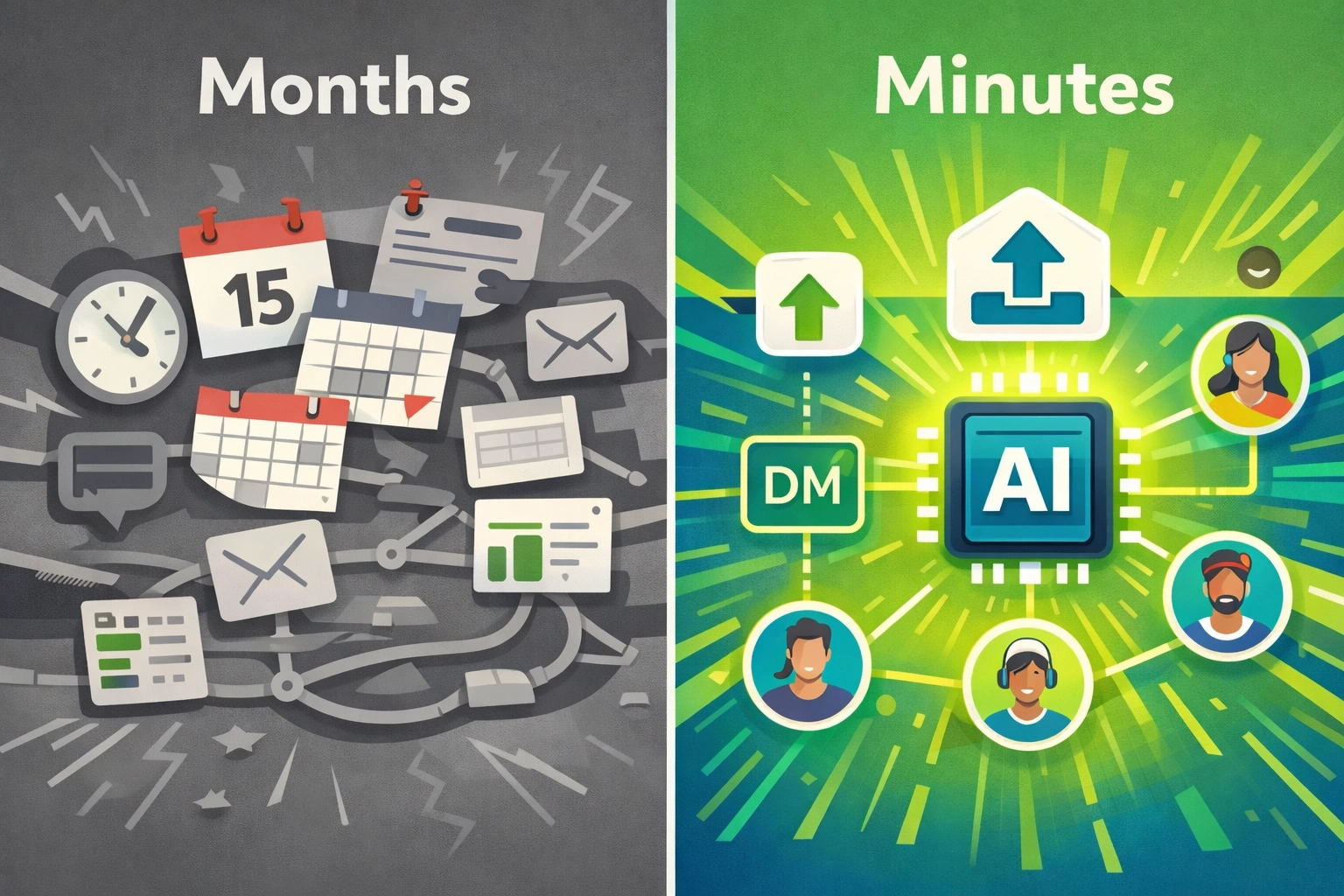
Minutes vs. Months: The Speed Factor
Traditional influencer outreach timelines looked something like this:
With AI-powered matching on a music marketing platform, that timeline compresses dramatically:
This speed isn't just convenient: it's strategic. Music trends move fast. If your song starts catching momentum organically, you need to amplify it now, not in two months when the algorithm's already moved on.
Real Scenarios: When AI Matching Wins
Scenario 1: The Genre-Bending Track
You've created a song that blends indie pop with Latin rhythms. Traditional genre tags won't help you here. AI matching identifies creators who've successfully posted similar fusion content, plus audiences who engage with both genres independently. You end up with 200+ creator matches you'd never have found searching "indie pop influencers."
Scenario 2: The Regional Release Strategy
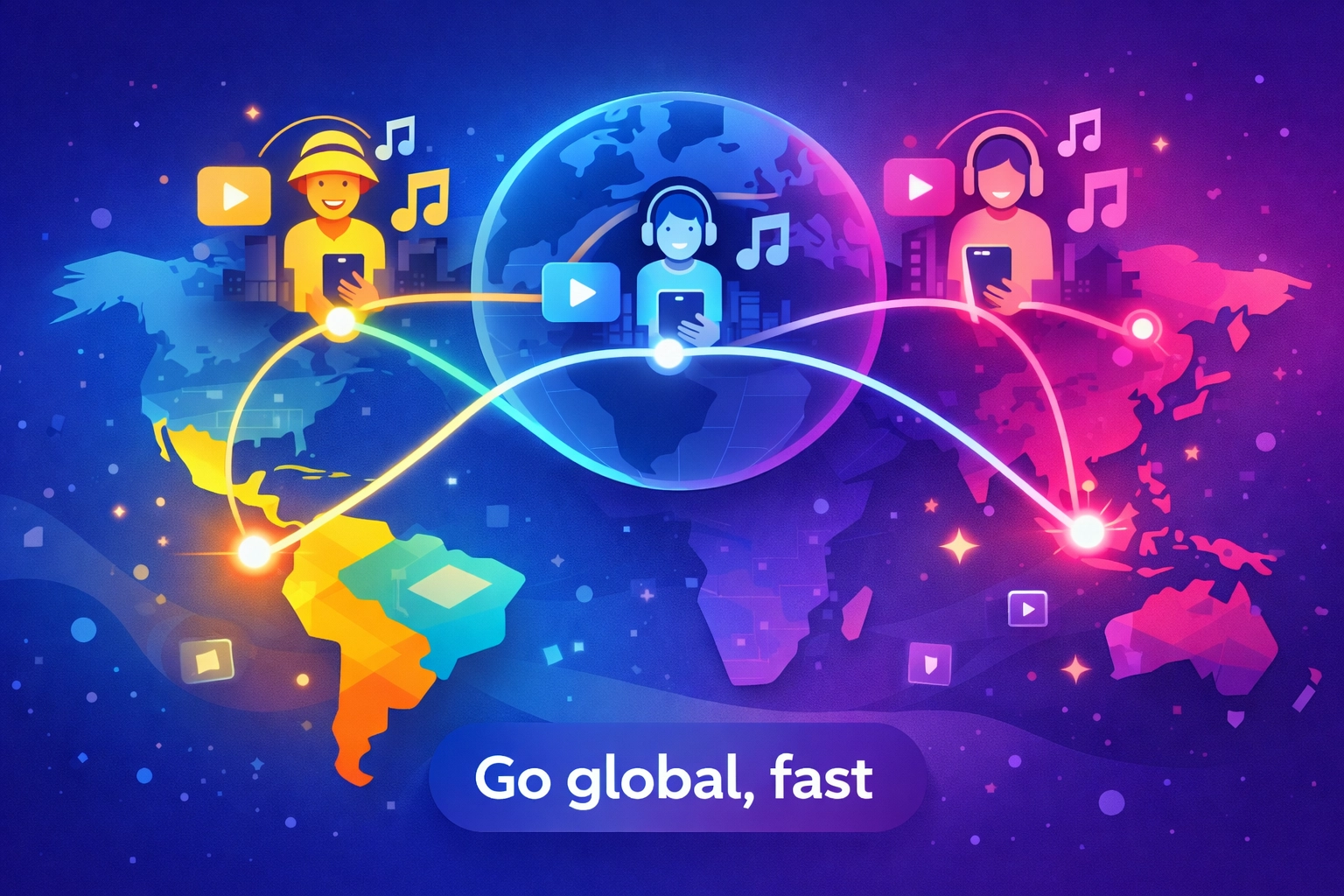
You want to test your track in specific markets before a full release. AI can isolate creators and audiences in those exact regions, understanding local platform preferences and cultural moments. Your music reaches São Paulo before New York, just like you planned: and the data tells you where to focus next.
Scenario 3: The Comeback Campaign
You're re-releasing older material or trying to revive a track that didn't initially pop. AI identifies creators who've successfully promoted "throwback" content or nostalgic tracks to audiences who weren't active when you first released it. Second chances aren't just possible: they're strategic.
Why This Matters for Every Type of Artist
For Independent Artists:
You don't have a label's marketing budget or industry connections. AI matching levels the playing field by giving you access to the same creator network that major labels use: and the intelligence to deploy it effectively. You're competing with smart strategy, not just deep pockets.
For Rising Artists:
You're past the "just starting out" phase but not yet mainstream. This is where targeted creator campaigns can accelerate your growth dramatically. AI helps you find the sweet spot between creators who are accessible and audiences who are ready to discover their next favorite artist.
For Established Artists:
You need to maintain relevance and reach new demographics. AI identifies emerging creator trends and younger audiences before they become obvious, keeping your music in front of fresh ears while retaining your core fanbase.
For Labels and Marketers:
You're managing multiple artists across different genres. AI matching lets you run dozens of campaigns simultaneously, each precisely targeted, without multiplying your team size. Scale your TikTok music promotion efforts without scaling your headcount.
The Creator Experience (Because They Matter Too)
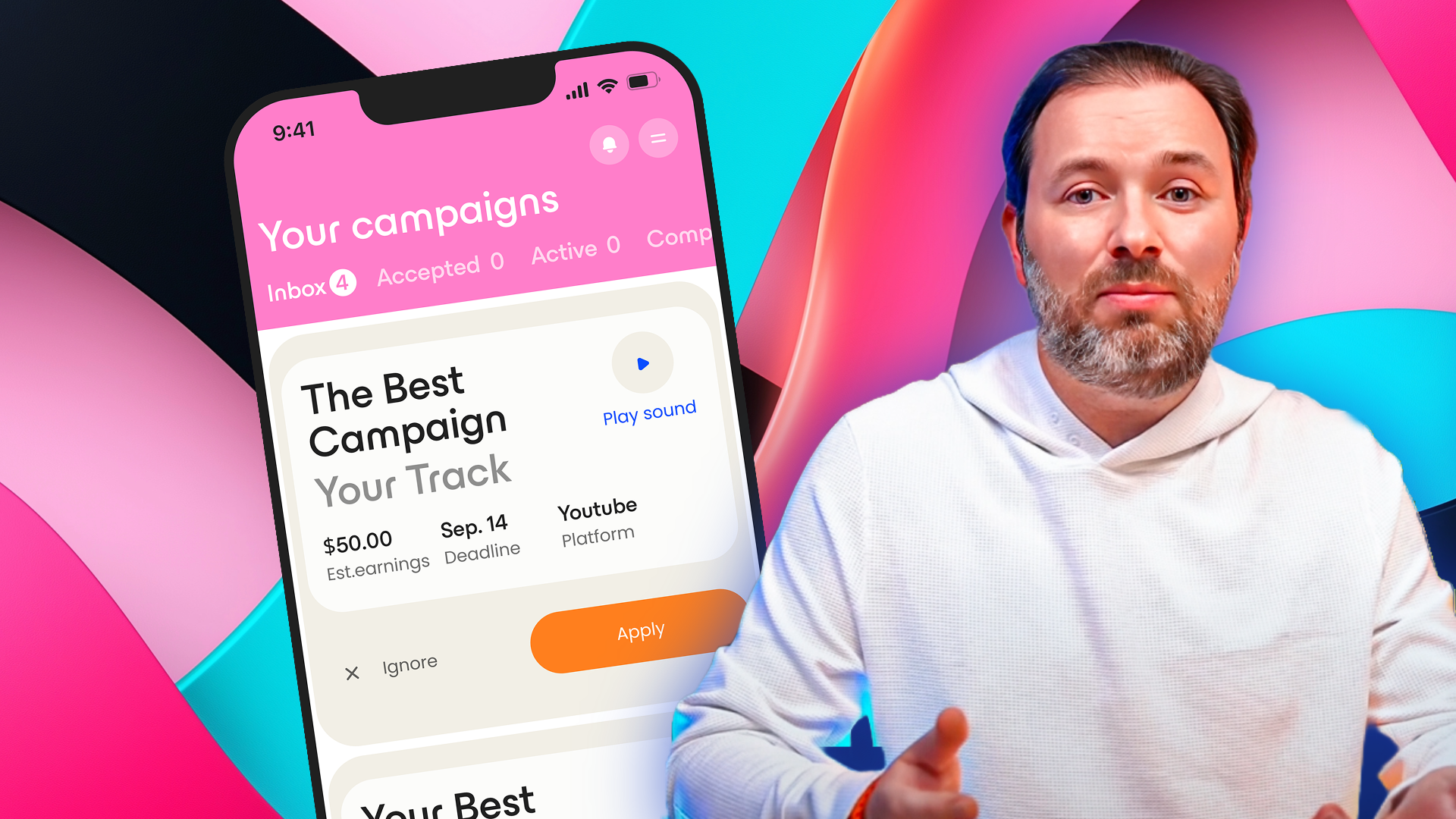
Here's something traditional music marketing gets wrong: treating creators like billboards. AI matching works both ways. Creators on platforms like Sound.me receive tracks that actually fit their content style and audience preferences. They're not wading through hundreds of irrelevant pitches.
When a creator receives an AI-matched track, they can immediately envision how to use it. The music fits naturally into their existing content strategy. This increases posting rates dramatically and results in more authentic, engaging content: which performs better for everyone.
It's a genuine win-win, powered by technology that understands both sides of the equation.
The Data Feedback Loop
Every campaign makes the AI smarter. When creators post your music and audiences engage (or don't), that information feeds back into the system. The algorithm learns which creator-track combinations drive streams, which audience segments convert, and which content styles translate to playlist adds.
Over time, your campaigns get more effective. The AI isn't just matching: it's optimizing based on your specific track's performance patterns. It's like having a marketing team that gets smarter with every campaign instead of just more experienced.
What This Means for Music Marketing's Future
We're watching the influencer marketing platform space evolve in real-time. The artists who understand and leverage AI matching now are building sustainable promotional strategies that don't depend on viral luck or exhausting manual outreach.
Your music still needs to be good: AI can't fix that. But if your track has genuine potential, AI matching ensures it reaches the creators and audiences most likely to connect with it. That's not hype. That's just intelligent distribution.
The question isn't whether to use AI-powered creator matching. It's whether you're ready to stop doing music marketing the hard way and start doing it the smart way.
Because while you're still sending DMs and hoping for responses, someone else's track is being matched with hundreds of creators who are actually going to post it. In minutes, not months.
%20copy.jpg)
.jpg)
.jpg)
%20copy.jpg)
%20copy.jpg)


.png)
.png)
.png)
.jpg)
.jpg)
.png)
.png)
.png)
.png)
.png)
.png)